Cost to Finish a Basement Calculator
- 2026 material and labor prices
- Adjusts for where you live
- DIY savings by trade
How much does it cost to finish a basement in 2026?
Most homeowners spend $30 to $80 per square foot to finish a basement, and a typical mid-range project lands around $40 to $65 per square foot. For an 800 sq ft basement that works out to roughly $33,000 without a bathroom and $50,000 with one. Your number depends mostly on size, whether you add plumbing, the finishes you pick, local labor rates, and how much of the work you do yourself.
Here’s what the calculator above returns for common basement sizes with average U.S. pricing, one or two walled-off rooms, heating extended, permits and a 10% contingency. It doesn’t include a bathroom.
| Basement size | Budget | Mid-range | High-end |
|---|---|---|---|
| 500 sq ft | $18,000–$22,000 | $22,000–$26,000 | $30,000–$38,000 |
| 750 sq ft | $26,000–$32,000 | $32,000–$38,000 | $44,000–$55,000 |
| 1,000 sq ft | $34,000–$40,000 | $40,000–$47,000 | $54,000–$68,000 |
| 1,500 sq ft | $48,000–$56,000 | $57,000–$66,000 | $75,000–$95,000 |
Where the money goes
On a mid-range project without a bathroom, the walls themselves eat the biggest share of the budget. Framing, insulation, drywall, the ceiling and paint together make up a little more than half the total. Electrical and lighting run about 13%, flooring 8–15% depending on what you choose, and heating and cooling around 10%. Add a bathroom and it quickly becomes the single most expensive line item, because it pulls in a plumber, tile work, fixtures and often a concrete-cutting crew.
Labor usually runs 60–65% of the total. That’s why doing even a few trades yourself (painting, flooring, trim) can save several thousand dollars.
What pushes the price up or down
- Size and layout. Cost scales with square footage, but every wall you add for a bedroom or office adds framing, drywall, a door and trim. An open rec room is the cheapest layout per foot.
- Plumbing. A bathroom is the biggest single swing. If your builder left drain rough-ins in the slab, you save $3,000–$6,000 compared with cutting concrete for new lines.
- Moisture. A dry basement is ready to frame. A wet one may need an interior drain, sump pump or exterior grading first, which can add $5,000–$15,000.
- Ceiling height and ductwork. Low ceilings and ducts running across the joists mean soffits, boxing and more labor. Most codes want about 7 ft of finished height in habitable rooms.
- Where you live. Labor in a high-cost metro can run 20–45% above the national average. Materials vary much less.
- Finish level. Builder-grade carpet and drywall versus engineered hardwood, coffered ceilings and custom built-ins can nearly double the cost of the same space.
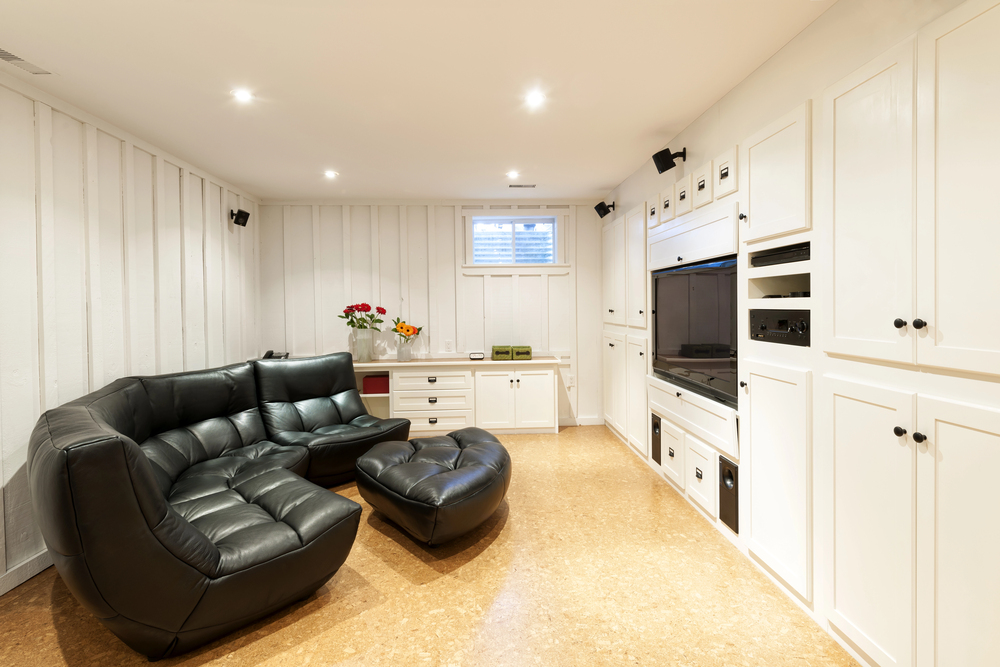
Costs people forget to budget for
- Permits and inspections: $600 to $3,000+ depending on your town and scope. Skipping them can cause trouble when you sell.
- Egress window: $4,000–$6,000. Required by code for any room you want to call a bedroom.
- Heating and cooling: $2,000–$5,000 to extend ductwork or add a ductless mini-split.
- Radon mitigation: $800–$2,500 if a test comes back high. Test before you close up the walls.
- Stairs and handrails: Old, steep or open stairs often need rebuilding to pass inspection.
- Surprises: Hidden water damage, old wiring or termite damage. That’s what the contingency buffer in the calculator is for.
DIY or hire a pro?
Painting, flooring, trim, demo and cleanup are all realistic weekend projects for a handy homeowner, and they’re where the calculator shows the easiest savings. Framing and drywall are doable but slow, and good drywall finishing takes practice. Leave electrical, plumbing, HVAC and anything structural to licensed pros. Many towns require it, and inspectors will check the work before the walls close up.
A middle path that works well: act as your own general contractor, hire individual trades for the technical work, and do the finish work yourself. It takes more of your time, but it can cut 15–20% off the total.
7 ways to save money finishing your basement
- Be your own general contractor. It saves the 15–20% GC markup. Learn the sequence of each task first (this basement finishing book is a good primer), then find vetted trades through HomeAdvisor.
- Get labor-only bids and buy materials yourself. You control quality and can stack store coupons. Home Depot and Lowe’s discount coupons often turn up on eBay.
- Pay with a cash-back card. On $15,000 of materials, even 2% back is $300. Cards like Discover and Capital One often run sign-up bonuses that a big project can easily unlock.
- Shop online through Rakuten. A few percent back on fixtures, lighting and flooring adds up on big-ticket items.
- Rent tools instead of buying. Rent a hammer drill, powder-actuated nailer or drywall lift for the days you need it, or buy used on Craigslist.
- Keep it open. Every wall you skip saves framing, drywall, a door and trim. An open plan with one bedroom is cheaper than three small rooms.
- Plan how you’ll pay. Compare a HELOC, cash-out refinance and personal loan before you sign a contract. Here’s how to finance a basement project.
Before you frame: get the basement dry
Finishing over a moisture problem is the most expensive mistake you can make. Trapped water leads to mold, musty smells, rotted framing and ruined flooring, and fixing it later means tearing out finished walls.
Run the plastic sheet test. Tape a two-foot square of heavy plastic tightly to the floor and another to a wall, sealing all four edges. Check it after a week or two. Droplets on the outside of the plastic mean the moisture is coming from humid indoor air. Droplets underneath mean water is coming through the concrete from outside.
Indoor humidity is a DIY fix. A good basement dehumidifier (around $250–$350) can pull several gallons of water out of the air a day. Wrap cold-water pipes in foam insulation to stop condensation, and insulate the hot lines while you’re at it to cut energy loss. See our guide to dehumidifying a basement.
Water from outside needs a pro. Fix gutters, downspouts and grading first. If water still gets in, you may need an interior drain and sump pump or exterior waterproofing. Solve it before any framing goes up. Damp basements also invite pests.
Choosing floors, walls and ceilings
Floors. Waterproof luxury vinyl plank is the default choice for most basements. It looks like wood, shrugs off moisture, floats over concrete and is DIY-friendly at around $3–$7 per sq ft installed. Carpet is cheaper and warmer underfoot but risky if you ever get water. Stained or epoxy-coated concrete is the budget option if your slab is level and crack-free. Compare basement flooring options.
Walls. Most basements get a stud wall or furring strips against the foundation, then insulation and drywall. Rigid foam board glued directly to the concrete is a smart first layer because it doesn’t absorb water. Mold-resistant drywall costs a little more and is worth it below grade. Paneling and basement wall panel systems go up faster and handle moisture better, but look less like the rest of the house. Foam vs. fiberglass insulation.
Ceilings. A drop ceiling keeps pipes, wires and shutoffs accessible, but it takes 3–6 inches of headroom. Drywall looks more finished and keeps height, though you’ll want access panels at valves and cleanouts. On a tight budget, an exposed ceiling sprayed black or white gives an industrial look for very little money. Always leave clearance around the furnace and water heater. How to soundproof a basement ceiling.
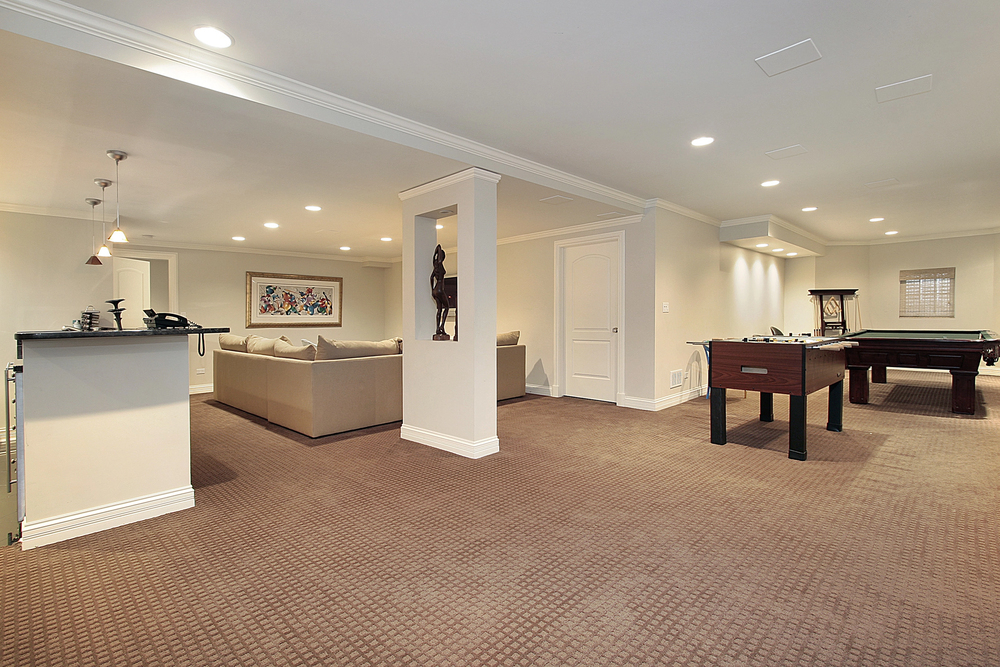
Is finishing a basement worth it?
For most homeowners, yes. It’s the cheapest way to add living space because the foundation, roof and exterior walls are already paid for. At resale, finished basements typically recoup around 70% of what they cost, and more in markets where buyers pay a premium for square footage. The bigger payoff is usually the day-to-day use: a guest suite, a home office, a gym or a playroom that frees up the rest of the house.
Planning guides
- Free basement budget spreadsheet
- 2026 basement remodeling cost guide
- Basement bathroom cost calculator
- Egress window cost calculator
- Basement apartment ROI calculator
- Basement financing calculator
- Radon mitigation cost calculator
- Mold remediation cost calculator
- Heated floor cost calculator
- Drop ceiling cost calculator
- Basement dehumidifier size calculator
- Crawl space encapsulation cost calculator
- Sump pump installation cost calculator
- Basement finishing checklist
- Costly basement finishing mistakes
- Turning a basement into a guest suite
- Building a basement home office
- A basement home theater on a budget
Go beyond the estimate: a 19-page planning guide, an exact materials list, a be-your-own-GC kit and a bathroom planner in one download.
Frequently asked questions
How much does it cost to finish a 1,000 sq ft basement?
Expect roughly $34,000 to $68,000 without a bathroom, depending on finish level and where you live. A mid-range finish with average pricing comes in around $40,000–$47,000. Adding a full bathroom brings that to roughly $55,000–$65,000.
How long does it take to finish a basement?
A professional crew typically needs 6–10 weeks for an average basement, longer with a bathroom or bar. Inspections, permit approvals and material lead times account for much of that. DIY projects usually take several months of evenings and weekends.
Do I need a permit to finish my basement?
In most U.S. towns, yes, especially for framing new rooms, electrical, plumbing, HVAC and egress windows. Permits typically cost $600–$3,000. Unpermitted finished space can complicate insurance claims and home sales, and it may not count toward your home’s listed square footage.
What’s the cheapest way to finish a basement?
Keep the layout open, skip the bathroom, paint or spray the ceiling instead of covering it, use stained concrete or carpet on the floor, and do the painting, flooring and trim yourself. Done that way, a basic finish can come in under $30 per sq ft.
Can a basement bedroom be legal?
Yes, if it meets code. That usually means an egress window or door large enough to climb out of, a minimum ceiling height (often about 7 ft), minimum floor area, and working smoke and carbon monoxide alarms. Check with your local building department.